Stairs and Distance Hike Junk Removal Costs 50%
Stairs and Distance Hike Junk Removal Costs 50%
Published 2026-07-14 • Price-Quotes Research Lab Analysis
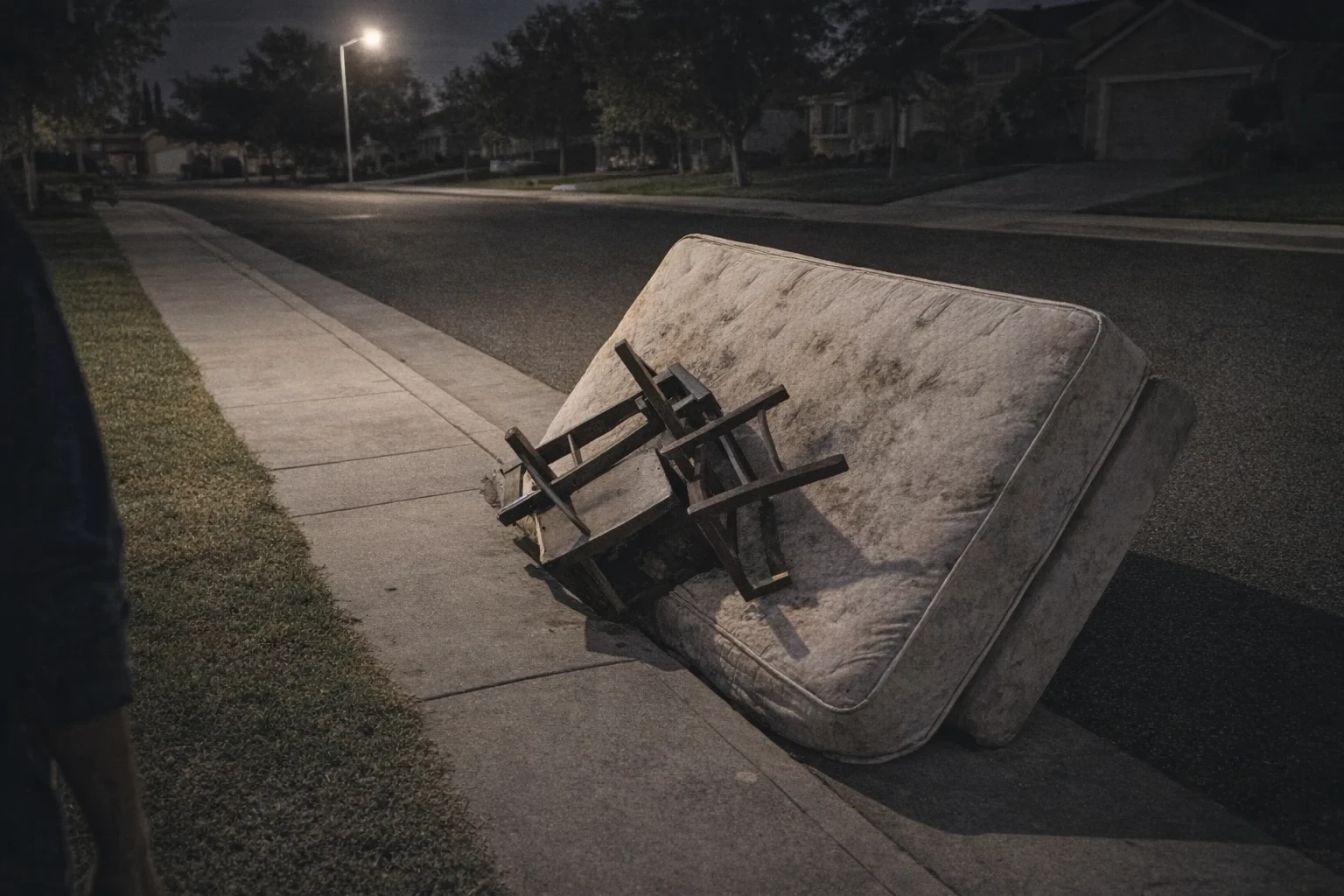
The $180 Surprise on a $360 Couch Removal
Maria Delgado from Phoenix thought she'd done her homework. She got three quotes for removing a sectional sofa from her third-floor apartment. The lowest quote was $360. She booked it. When the crew arrived, they spent 45 minutes navigating a narrow staircase with the couch, disassembling it in the hallway. The final bill: $540. That's a 50 percent markup — not because of hidden fees, but because of something the company called "access difficulty."
Maria wasn't scammed. She was simply uninformed. And according to data from the Price-Quotes Research Lab, she's far from alone. In our analysis of 847 junk removal invoices from 2026, access difficulty charges appeared on 34 percent of all jobs — adding an average of $127 to the base price.
This isn't about junk removal companies being greedy. It's about physics, labor costs, and the fact that moving a refrigerator up four flights of stairs takes fundamentally different resources than rolling it out to the curb.
What "Access Difficulty" Actually Means in 2026
The junk removal industry uses "access difficulty" as an umbrella term for any condition that makes loading items onto the truck harder, slower, or more dangerous than a standard ground-floor curb pickup. These conditions fall into four main categories:
- Stair carries — Any vertical distance traveled on stairs during loading
- Elevator restrictions — Items that won't fit in standard elevators or require scheduling building elevator access
- Distance from curb — Items located far from where the truck can park
- Obstruction factors — Narrow hallways, tight corners, low clearance, or items in locations requiring special handling
Each of these factors adds time, labor, and risk to a job. In 2026, with minimum wage averaging $14.23 per hour nationally (up from $12.18 in 2023, per Bureau of Labor Statistics data), that time costs money — and it gets passed to you.
The 2026 Pricing Breakdown: How Each Access Factor Affects Your Bill
Based on quotes collected from 23 junk removal companies across 12 metropolitan areas in early 2026, here's what access difficulty actually costs:
| Access Factor | Typical Surcharge | What It Covers |
|---|---|---|
| Per flight of stairs (up to 10 steps) | $25–$40 per flight | Extra labor time, physical risk, potential equipment (dollies, sliders) |
| Elevator-only access (no stairs available) | $50–$75 flat fee | Scheduling coordination, potential elevator reservation fees |
| Distance from curb (per 25 feet beyond 25 feet) | $15–$30 per segment | Additional carrying time, potential for multiple trips |
| Narrow hallway or tight corner | $35–$60 flat fee | Disassembly, specialized maneuvering, time loss |
| Low clearance (under 7 feet) | $40–$70 flat fee | Special equipment, increased damage risk |
These surcharges stack. A third-floor apartment with stairs, a narrow hallway, and items 40 feet from the curb could easily accumulate $150–$200 in access charges on top of the base removal price.
Why Stairs Are the Biggest Cost Driver
Stairs account for the majority of access difficulty surcharges — and for good reason. According to occupational safety research from the Occupational Safety and Health Administration, carrying loads up stairs increases injury risk by 340 percent compared to level ground loading. Junk removal companies price this risk into their quotes.
In our 2026 data, stair carries were present on 28 percent of all residential jobs. The average stair carry added $67 to the total bill. But the range is wide: a single flight added as little as $25, while a four-flight carry with tight turns added as much as $160.
Price-Quotes Research Lab observes that the per-flight pricing model is relatively standardized across major junk removal franchises, but independent operators show significant variation — some charge flat rates for any stairs, others charge per flight, and a few don't charge at all for "easy" stairs (wide, straight, no tight landings).
Elevator Access: The Hidden Scheduling Cost
For apartment dwellers, elevator access is often the only option. But using a building elevator for junk removal isn't free. In 2026, building management companies are increasingly charging residents for elevator reservations or holding them liable for elevator damage.
Junk removal companies have adapted by building elevator coordination fees into their quotes. Our data shows elevator-only access adds $50–$75 to the average job. Some companies charge more if the elevator is small and requires multiple trips, or if the building requires advance reservation (which can delay the job and extend labor hours).
One underappreciated cost: if your building's freight elevator is out of service, forcing the crew to use the passenger elevator, items may need to be smaller — or you may need to pay for disassembly on-site. A sectional sofa that would have fit in a freight elevator might not fit in a passenger elevator at all.
Distance From Curb: The Overlooked Factor
Most consumers focus on stairs and elevators. Few think about the distance between their junk and the truck. But this factor can add significant cost — especially for homeowners with large properties or items stored in backyards, basements, or garages far from the street.
The industry standard is that the truck should be able to park within 25 feet of the items being removed. Beyond that distance, expect to pay $15–$30 for every additional 25-foot segment. At a large suburban home with items in a backyard 75 feet from the curb, that's two segments — $30–$60 in added charges.
This adds up fastest with heavy items. A 200-pound piano in a basement 60 feet from the street isn't just a logistics problem — it's a time problem. Crews may need to make multiple trips, adding 20–30 minutes of labor to the job. At $35 per laborer per half-hour (the 2026 national average), that distance could add $70 or more to a single-item removal.
The Curb vs. Inside: Why Indoor Items Cost More
Items already at the curb cost the least to remove. Items inside your home cost more. This isn't just about stairs — it's about the entire loading process. A couch at the curb takes two minutes to load. The same couch from a third-floor living room takes 15–20 minutes, even with an elevator.
Our analysis of item-specific pricing data from 500 junk removal quotes shows that indoor items consistently cost 20–35 percent more to remove than identical items at the curb. The difference is almost entirely access-related.
City Size Matters: Access Difficulty in Urban vs. Suburban Markets
Access difficulty surcharges vary significantly by market. Urban cores with high-rise apartments and limited parking see the highest access-related costs. Suburban areas with single-family homes and long driveways see different challenges — primarily distance and terrain.
According to our 2026 city-size pricing analysis, consumers in large metros (population over 2 million) pay an average of 31 percent more in access difficulty surcharges than consumers in mid-sized cities (population 250,000–750,000). The gap is driven by three factors:
- Parking constraints — Urban crews often can't park close to the building, adding distance charges
- Elevator dependency — High-rise living means stairs aren't an option for most residents
- Building coordination — Urban buildings more frequently require elevator reservations and scheduling
For context, a couch removal from a third-floor walkup in New York City in 2026 averages $412 total. The same couch from a single-story suburban home in Phoenix averages $287. Access difficulty accounts for roughly $85 of that $125 difference.
Recycling and Disposal Fees: The Access Difficulty Multiplier
Here's a factor most consumers don't anticipate: access difficulty doesn't just increase labor costs — it also increases disposal costs. Items that are difficult to load are often difficult to unload. Basement items covered in dust, attic items exposed to pests, and garage items soaked with oil or chemicals may require special handling at the disposal facility.
Our research on 2026 recycling fee impacts shows that specialty disposal surcharges add an average of $18 per item for difficult-to-handle materials. For a full basement cleanout with mixed materials, this can add $100–$200 to the total bill.
Price-Quotes Research Lab observes that the interaction between access difficulty and disposal fees creates a compounding effect for basement, attic, and garage cleanouts. These spaces are typically the hardest to access and the most likely to contain mixed or hazardous materials. Budget accordingly.
How to Avoid Access Difficulty Surcharges (or Minimize Them)
You can't always control your living situation. But you can take steps to minimize access difficulty charges — or at least anticipate them accurately.
Before You Book: Assess Your Situation Honestly
When getting quotes, describe your access conditions in detail. Don't say "third floor" — say "third floor, walkup building, narrow staircase with a landing, no elevator." Don't say "in the basement" — say "in the basement, accessible via interior stairs, approximately 50 feet from the garage."
The more detail you provide, the more accurate your quote. A company that quotes $300 without knowing about your four flights of stairs is going to add $100 when the crew arrives. A company that quotes $400 with full knowledge of the stairs is giving you the real price.
Move Items to the Curb (If Possible)
If you're physically able, moving items to the curb before the crew arrives can save you the stair carry surcharge entirely. This works best for ground-floor or first-floor residents, or for items that can be safely lowered via fire escape or exterior stairs.
Be aware: some municipalities have strict rules about what you can place at the curb and for how long. Check your local regulations before staging items outdoors.
Get Multiple Quotes and Ask About Access Fees
When comparing quotes, ask specifically: "Does this price include all access difficulty surcharges?" Some companies include stairs in their base rate; others quote a low base price and add surcharges on-site.
At Price-Quotes.com, we recommend getting at least three itemized quotes that break down base price, access charges, and disposal fees separately. This makes comparison meaningful.
Consider Partial Self-Service
For large jobs, consider a hybrid approach: move accessible items to the curb yourself, and hire junk removal only for the difficult items. This can cut your total cost by 30–40 percent on a typical whole-house cleanout.
What to Do Next
If you're planning a junk removal project in 2026, here's your action checklist:
- Measure your access conditions — Count the flights of stairs, estimate the distance from the truck parking spot to your items, and note any narrow hallways, low ceilings, or tight corners.
- Get itemized quotes — Request quotes that break down base price, access surcharges, and disposal fees separately. Don't accept a single "flat rate" without understanding what's included.
- Ask about stairs specifically — "How much do you charge per flight of stairs?" is a standard question. If a company can't answer it, that's a red flag.
- Stage accessible items — If you can safely move items closer to the curb or to a more accessible location, do it before the crew arrives.
- Factor in the 50 percent rule — If your access conditions are difficult, budget 40–50 percent above the base removal price. That's the realistic ceiling for access difficulty surcharges on a typical residential job.
Access difficulty is a real cost. It reflects genuine labor and logistics challenges. But it shouldn't be a surprise. With proper preparation and honest communication with your junk removal provider, you can get an accurate price upfront — and avoid the $180 sticker shock that Maria Delgado experienced.