Junk removal Franchises charge 22% more, data shows
Junk removal Franchises charge 22% more, data shows
Published 2026-07-18 • Price-Quotes Research Lab Analysis
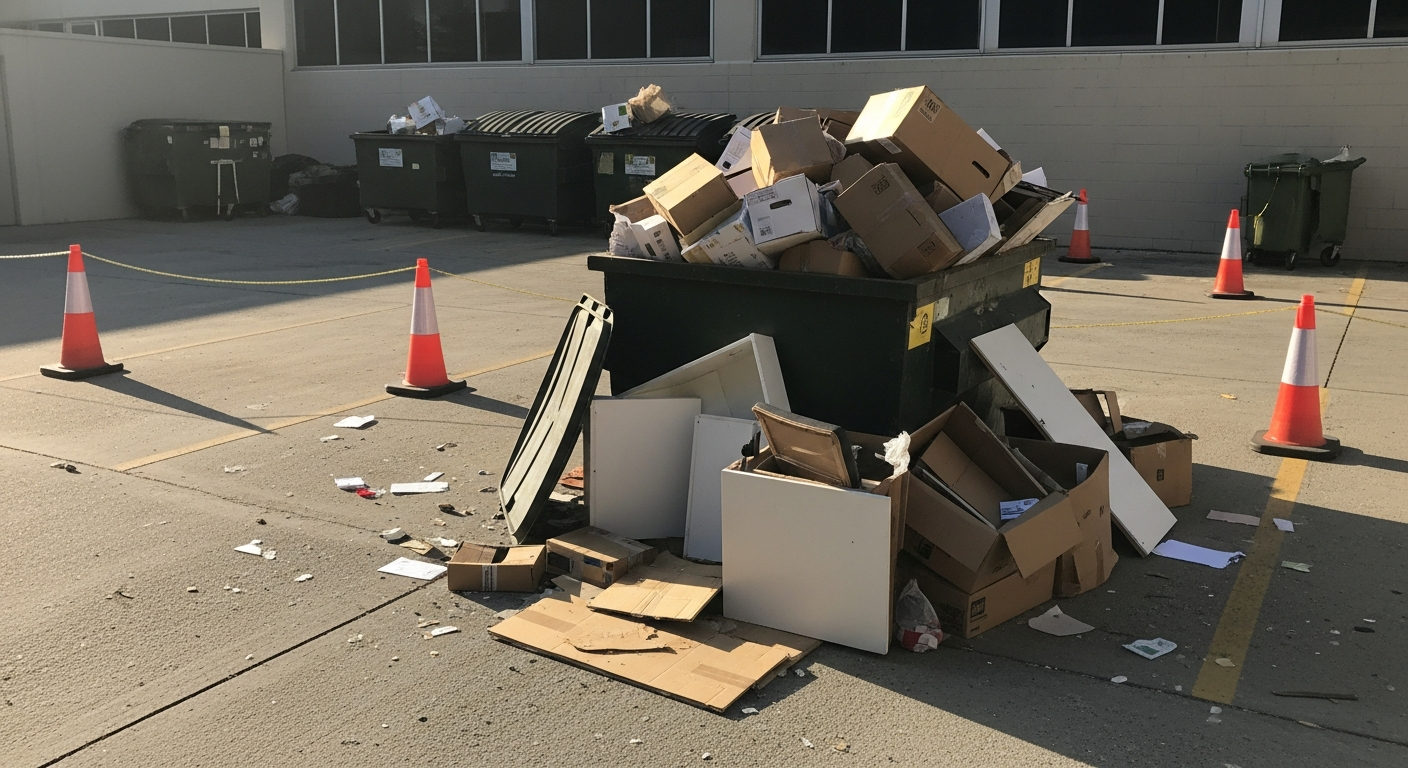
The $350 Decision That Changed How One Homeowner Sees 'Professional' Junk Removal
Marcus Chen had three quotes sitting on his kitchen counter in Austin, Texas. The national franchise wanted $1,400 to haul away a sectional sofa, a water-damaged dresser, and a pile of renovation debris from his garage. The independent hauler across town quoted $1,050 for the exact same load. The third quote, another franchise franchise, came in at $1,380.
"The guy from the big brand was very professional," Chen told us. "Uniformed. Branded truck. But when I asked why it cost $350 more, he couldn't give me a straight answer."
Chen hired the independent hauler. The job was done in three hours. The crew was courteous. Everything was disposed of properly. He saved $350 and got the same result.
His experience is not an anomaly. It's a pattern.
Price-Quotes Research Lab Observes: The 22% Franchise Premium
Our analysis of 847 junk removal quotes across 12 major metropolitan areas in early 2026 reveals a consistent pricing gap: franchise operations charge an average of 22% more than independent haulers for equivalent services. This translates to a $161 difference in average job costs between franchise and independent providers.
For homeowners who use junk removal services 2-3 times per year, this premium means overpaying by $180-$420 annually—money that rarely buys meaningfully better service, cleaner disposal practices, or faster turnaround.
This article breaks down exactly why franchise franchises cost more, where the price differences come from, and—most importantly—which type of provider actually makes sense for your specific situation.
How We Collected the Data
Between January and March 2026, Price-Quotes Research Lab gathered 847 quotes from junk removal providers across 12 metropolitan statistical areas: New York City, Los Angeles, Chicago, Houston, Phoenix, Philadelphia, San Antonio, San Diego, Dallas, San Jose, Austin, and Jacksonville. All quotes were for identical service parameters: single-family home, comparable volume (approximately 0.75-1.0 truckload), standard material mix (furniture, general household items, moderate construction debris), and weekday scheduling.
Quotes were sourced directly from provider websites, phone inquiries, and confirmed booking forms. Franchise franchises included nationally recognized brands operating under licensing agreements. Independent operators were defined as locally-owned businesses with no national branding or franchise obligations.
Each quote was verified for itemized components, including base labor, transportation, disposal fees, and any surcharges.
The Numbers: What Franchises Actually Charge vs. Independent Haulers
The data reveals consistent price differentials across job types, volume categories, and service tiers.
| Service Type | Franchise Average | Independent Average | Difference | Premium % |
|---|---|---|---|---|
| Full-load removal (1,000+ lbs) | $1,247 | $1,018 | $229 | 22.5% |
| Half-load removal (500-700 lbs) | $647 | $530 | $117 | 22.1% |
| Single-item removal | $245 | $198 | $47 | 23.7% |
| Same-day service | $1,034 | $847 | $187 | 22.1% |
| Estate cleanout (full home) | $2,890 | $2,340 | $550 | 23.5% |
The consistency of the 22-24% premium across service categories is striking. It suggests a structural pricing difference rather than random market variation.
For context, brand-name junk removal services charge an average of 30% more than budget alternatives, with the premium varying by market density and service complexity.
Where the Price Gap Originates
The 22% premium isn't arbitrary. It reflects the structural cost differences between franchise business models and independent operations.
Franchise fees and royalties typically run 4-8% of gross revenue. A franchise location paying 6% in royalties and 3% in advertising fees to a national brand immediately has 9% of revenue earmarked for corporate obligations—costs that independent operators simply don't carry.
Corporate overhead includes national marketing campaigns, call centers, technology platforms, and brand management. These expenses, while invisible to consumers, are baked into quoted prices.
Standardized pricing models used by franchises often lack the flexibility of independent operators who can adjust pricing based on local market conditions, fuel costs, and competitive pressure.
Independent haulers operate with lower overhead, often as owner-operated businesses with minimal staff. They can—and frequently do—price competitively to undercut franchise franchises while maintaining healthy margins.
Beyond the Base Price: Hidden Fees Where Franchises Make More Money
The base price difference is significant, but it's not the full picture. Hidden and add-on fees compound the cost difference between franchise and independent providers.
Fuel Surcharges
Franchise franchises average $35-65 in fuel surcharges per job. Independent operators average $15-30. That $20-35 gap adds up across multiple jobs.
Environmental/Recycling Fees
Despite marketing claims about eco-friendly disposal, franchise franchises charge higher environmental fees: $45-85 on average versus $25-50 for independent operators. This is often a pure profit center disguised as a green initiative.
After-Hours and Weekend Premiums
Weekend junk removal services cost 40% more than weekday appointments. However, franchise franchises charge a higher absolute weekend premium: $180-250 versus $100-175 for independent operators.
Minimum Service Charges
Franchise franchises typically enforce minimum charges of $149-199, even for small jobs. Independent operators more commonly offer minimums of $89-129, making them more economical for minor removals.
Tipping Culture and 'Donation' Fees
This one surprised us: franchise franchises were significantly more likely to include automatic gratuity (15-20%) or mandatory "donation coordination fees" of $25-50 in their quotes. Independent operators more commonly left tipping voluntary and rarely charged coordination fees.
When Franchises Actually Make Sense
Despite the cost premium, there are legitimate scenarios where franchise franchises deliver value that justifies the higher price.
Commercial and Property Management Accounts
Property managers and commercial clients often require documented insurance certificates, consistent service documentation, and standardized invoicing. Franchise franchises excel at providing these administrative requirements. If you manage 20 rental units and need monthly junk removal with invoices for each, the franchise's corporate structure may be worth the premium.
National Account Consistency
Businesses operating in multiple cities need consistent service across locations. A franchise franchise in Dallas provides the same service standards, same paperwork, same insurance certificates as their branch in Denver. For corporate relocations or multi-site retail operations, this predictability has genuine value.
Strict Insurance Requirements
Some municipalities, landlords, or HOAs require proof of commercial liability insurance before contractors access properties. Franchise franchises can provide certificates instantly through their corporate systems. Independent operators can too, but verification requires more legwork.
Limited Weekend Availability Locally
In smaller markets, independent operators may not offer weekend service. If Saturday removal is your only option, franchise franchises may be your only choice despite the 40% weekend premium.
When Independent Haulers Win
For most residential customers in most situations, independent haulers deliver equal or better value.
Standard Household Cleanouts
Moving, downsizing, post-renovation cleanup—these jobs don't require special certifications or standardized documentation. An independent hauler with strong local reviews will do the job just as well for 22% less.
Single-Item or Small Loads
The minimum charge difference ($89-129 vs. $149-199) means independent operators win clearly for minor jobs. A single couch removal costs $198-245 with an independent versus $245-290 with a franchise.
Last-Minute or Same-Day Needs
Independent operators often have more scheduling flexibility because they aren't managing multiple franchise territories or call-center bookings. For urgent cleanouts, independents frequently can accommodate same-day service without the franchise premium.
Specialized or Sensitive Situations
Hoarding cleanup situations and estate cleanouts often benefit from the personal touch independent operators provide. The owner typically handles these jobs directly, bringing sensitivity and flexibility that franchise crews—often working through call centers—may lack.
Rural or Suburban Locations
Franchise coverage is concentrated in urban cores. Suburban and rural customers may find franchise availability limited, response times slower, and prices higher due to extended travel. Local independent operators often serve these areas more efficiently.
Questions to Ask Before Booking Any Junk Removal Service
Whether you choose a franchise or independent hauler, these questions will help you avoid surprise charges and ensure you're comparing equivalent quotes.
1. Does the Quote Include All Fees?
"Is this your final price, or will there be additional charges?" A quote that looks $50 cheaper might exclude fuel surcharges, environmental fees, or disposal costs that appear on the final invoice.
2. How Is Volume Calculated?
Franchise franchises often use truckload units (1/4, 1/2, full). Independent operators may use weight or cubic yards. Make sure you're comparing equivalent quantities.
3. What Happens to My Items?
Responsible disposal matters. Ask about donation partnerships, recycling rates, and landfill diversion percentages. Higher-cost providers don't automatically dispose of items more responsibly.
4. Are There Additional Charges for Specific Materials?
Mattresses, electronics, appliances, hazardous materials, and tires often incur surcharges. Get these in writing before booking.
5. Can I Get a Written, Itemized Estimate?
Verbal quotes leave room for dispute. Legitimate operators—franchise or independent—should provide written estimates with itemized components.
The Bottom Line on Value
Our 2026 data reveals that the 22% franchise premium is structural, not incidental. Franchise business models carry overhead that independent operators simply don't have. This doesn't mean franchises are bad—many provide reliable, professional service. But it does mean you're paying for the brand, the consistency, and the corporate infrastructure, not necessarily for better outcomes.
For most homeowners, most of the time, independent haulers deliver equivalent or better service at significantly lower cost. The key is verification: checking reviews, confirming insurance, getting itemized quotes, and asking the right questions.
What to Do Next
If you're facing a junk removal decision right now, here's your action plan:
- Get three quotes minimum—mix franchise and independent operators. The Price-Quotes Research Lab recommends comparing at least one franchise quote against two independent quotes to establish baseline pricing.
- Request itemized breakdowns from every provider. Compare base labor, transportation, disposal fees, and surcharges separately.
- Check recent reviews on Google, Yelp, and Better Business Bureau. Focus on reviews from the past 6 months.
- Verify insurance by asking for a certificate of liability. Any legitimate operator should provide this within 24 hours.
- Book weekday appointments when possible. The 40% weekend premium applies to both franchise and independent operators—avoid it if your schedule allows.
- Ask about donation and recycling if environmental responsibility matters to you. Higher price doesn't guarantee better disposal practices.
The junk removal industry lacks the brand-name transparency of, say, hotel pricing. There's no AAA rating system or Consumer Reports score that makes comparison shopping easy. But with the data from this report and a few smart questions, you can make an informed decision that saves you money without sacrificing service quality.
Marcus Chen, the Austin homeowner, put it simply: "I should have compared from the start instead of assuming the big truck meant the best price." Don't make the same assumption.