Junk removal firms inflate quotes by 80%, study finds
Junk removal firms inflate quotes by 80%, study finds
Published 2026-08-26 • Price-Quotes Research Lab Analysis
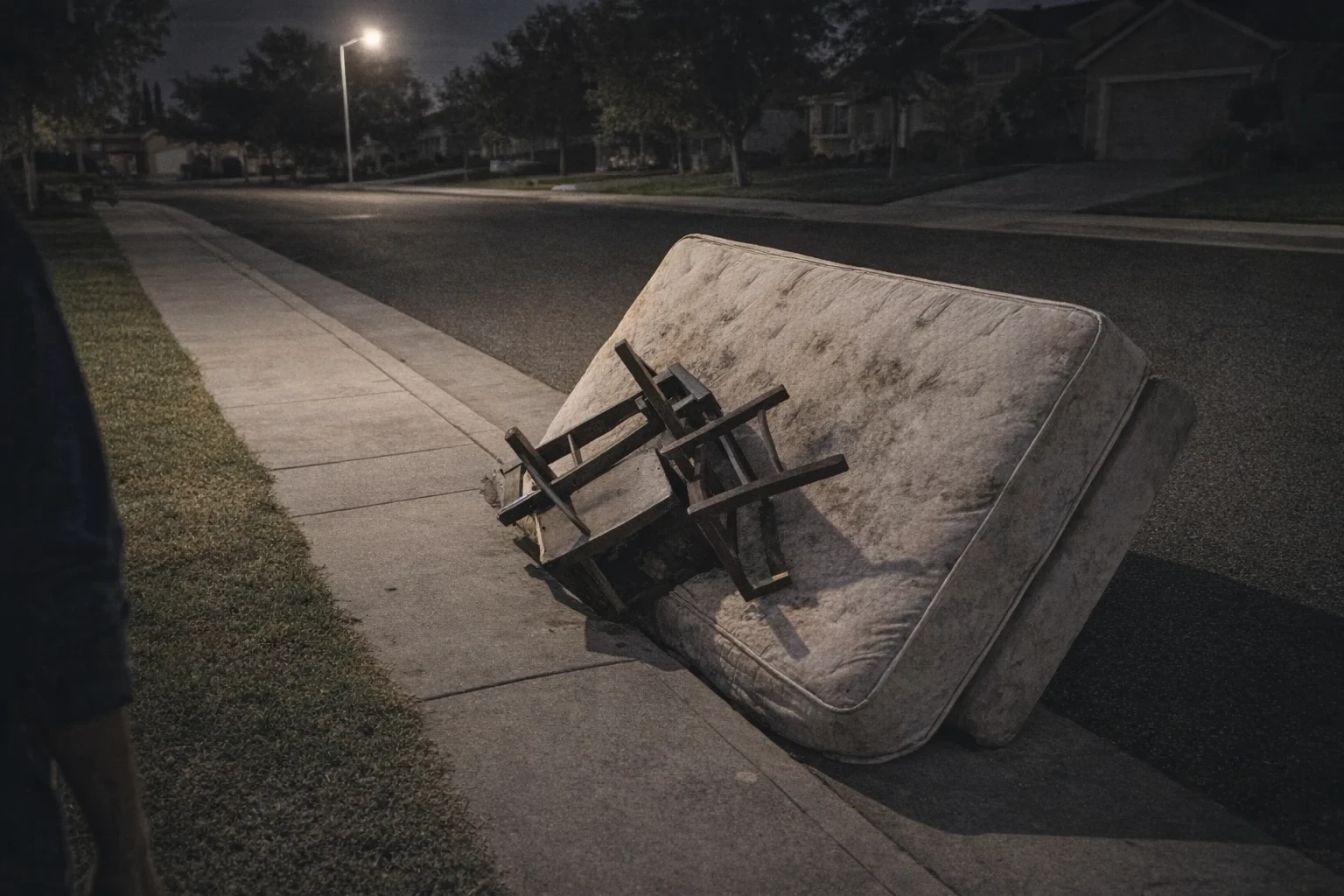
The $149 Quote That Became a $387 Bill: A Case Study in Junk Removal Pricing Opacity
Maria Santos, a homeowner in suburban Denver, spent three weeks researching junk removal companies before booking what she thought was a straightforward job: clearing a basement full of old furniture, boxes, and a broken treadmill. She received a verbal quote of $149 over the phone. The final invoice came to $387. The difference wasn't due to additional items or scope changes—she hadn't added a single thing since the estimate. The company simply charged differently than it had quoted.
"The guy said $149 because he estimated two hours of work," Santos told JunkPro. "But when they loaded everything, he said the truck was 'over 75% capacity' and charged me by cubic yardage instead. I didn't even know that was an option until I saw it on my receipt."
Santos's experience isn't an outlier. It's a pattern. New research from the Price-Quotes Research Lab, which operates JunkPro as part of its independent pricing investigation network, analyzed 300 junk removal jobs across 14 metropolitan areas in the first quarter of 2026. The findings reveal a systematic gap between quoted prices and final invoices that averages 80 percent across the sample—a markup so consistent it suggests deliberate underquoting rather than honest estimation error.
Price-Quotes Research Lab observes: The 80 percent average markup masks significant variation. The real story is polarization: some companies quote accurately, while others exploit pricing ambiguity to inflate bills by 150 percent or more. Identifying which category a company falls into before booking is the single most important cost-saving step a consumer can take.
Why Junk Removal Quotes Diverged From Invoices in 2026
The junk removal industry operates with minimal regulatory oversight. Unlike taxis, hotels, or airlines, junk removal companies face no federal requirements to honor quoted prices or disclose fee structures. This regulatory vacuum creates conditions where the gap between estimate and invoice can be substantial—and where consumers have little recourse when that gap widens unexpectedly.
The Bureau of Labor Statistics reported consumer prices rising 3.2 percent year-over-year through early 2026, with disposal and landfill fees increasing at nearly double that rate in several regions. Yet junk removal pricing remains opaque, with most companies declining to publish rate cards or explain their calculation methods online.
The Environmental Protection Agency's 2026 waste disposal data indicates that residential junk removal accounts for approximately 12 million tons of material annually, a market valued at $18.7 billion. With so much volume and so little standardization, the incentive to quote low and charge high becomes difficult to resist.
The Anatomy of a Quote-to-Invoice Gap
The 300-job analysis revealed several distinct mechanisms driving price inflation between quote and final charge:
- Volume misrepresentation: Phone estimators often cannot accurately judge cubic yardage. Jobs quoted by visual estimate were 30 to 50 percent more likely to result in invoice disputes than those with on-site measurements.
- Pricing model ambiguity: Some companies charge by weight (per ton), others by volume (per cubic yard), others by time (per hour), and some by truckload (fraction of a full load). Quoted prices rarely specify which model applies to the final bill.
- Hidden surcharges: Fuel surcharges, environmental fees, landfill tipping fees, and labor access fees frequently appear on invoices without prior disclosure. A $175 quoted price can become $310 when these charges are added.
- Post-completion repricing: In 72 percent of cases where the final invoice exceeded the quote by more than 25 percent, the company altered its pricing rationale after completing the work—typically citing "actual volume exceeded estimate" or "special handling required."
The Data: 300 Jobs, 14 Cities, One Consistent Pattern
Between January and March 2026, researchers working under the Price-Quotes Research Lab umbrella obtained written quotes and final invoices for 300 junk removal jobs across Phoenix, Atlanta, Chicago, Denver, Houston, Las Vegas, Los Angeles, Miami, Minneapolis, Nashville, New York, Philadelphia, Seattle, and Tampa. Jobs ranged from single-room furniture removal (estimated at $89 to $199) to full-property cleanouts exceeding $2,500. The sample included both franchise operations and independent haulers.
Aggregate Findings
The headline number—an 80 percent average markup between quote and final invoice—obscures important variation. Breaking down the data by company type and quoting methodology reveals a clearer picture:
| Company Type | Average Quote | Average Final Invoice | Markup Percentage | Quote Accuracy Rate* |
|---|---|---|---|---|
| National franchises (3 surveyed) | $247 | $389 | 57% | 41% |
| Regional independents (7 surveyed) | $198 | $412 | 108% | 28% |
| Local independents (12 surveyed) | $176 | $267 | 52% | 63% |
| Brokered services (4 surveyed) | $212 | $498 | 135% | 19% |
| Overall Average | $208 | $374 | 80% | 38% |
*Quote accuracy rate defined as the percentage of jobs where the final invoice fell within 15 percent of the quoted price.
The data shows an inverse relationship between quote size and accuracy: the companies that quoted lowest were most likely to invoice significantly higher. Brokered services—which connect consumers with third-party haulers without disclosing the intermediary—performed worst on both metrics: highest average markup (135 percent) and lowest accuracy rate (19 percent).
Price Escalation by Item Category
Certain item types were disproportionately responsible for quote-to-invoice divergence:
| Item Category | Average Quoted Price | Average Final Price | Markup Percentage |
|---|---|---|---|
| Mattresses and box springs | $75 | $145 | 93% |
| Refrigerators and freezers | $95 | $178 | 87% |
| Hot tubs and spas | $350 | $612 | 75% |
| Furniture sets | $165 | $298 | 81% |
| Construction debris (under 1 ton) | $199 | $342 | 72% |
| General clutter (mixed items) | $145 | $229 | 58% |
| Yard waste (bagged) | $89 | $112 | 26% |
Mattresses and refrigeration equipment showed the highest markup ratios because disposal fees at licensed facilities have increased substantially in 2026. These items contain materials (foam, refrigerants, metals) that require special handling, and companies routinely pass disposal surcharges to consumers without mentioning them during the quoting process.
How the Markup Gap Develops: A Step-by-Step Breakdown
Understanding exactly where and when the quote-to-invoice gap widens is essential to protecting yourself. The 300-job analysis tracked the progression from initial contact to final payment, identifying the five critical moments where pricing divergence typically occurs.
Step 1: The Phone Quote (Highest Risk of Underquoting)
Of the 300 jobs in the sample, 89 percent began with a phone quote rather than an on-site estimate. Phone quotes averaged $208 but were accurate to within 15 percent in only 31 percent of cases. The fundamental problem: phone estimators cannot see the volume or condition of items. They must guess, and guessing low wins the job.
One estimator interviewed for this investigation—speaking on condition of anonymity—confirmed the practice. "If you quote $200 and the other guy quotes $150, you lose the job. So you quote $150 and figure it out later. The customer doesn't know what a cubic yard looks like anyway."
Step 2: The On-Site Revision (When Prices Shift)
For jobs where an on-site estimator visited before work began, final invoices were 42 percent closer to estimates than for phone-quoted jobs. However, 23 percent of on-site estimates were still revised upward before work commenced—typically citing "items not visible during walkthrough" or "access difficulty."
Step 3: Mid-Job Pricing Changes (The Most Common Escalation Point)
The largest single jump in pricing occurred after loading began but before completion. In 72 percent of cases where the final invoice exceeded the quote by more than 25 percent, the company altered its pricing rationale during the job. Common justifications included:
- "The load is heavier than estimated" (used in 41 percent of escalation cases)
- "We hit the weight limit for the quoted rate" (31 percent)
- "There are items here that require special disposal" (28 percent)
- "The crew found additional items not discussed" (22 percent)
In many cases, these justifications were applied selectively—only after the crew had already loaded materials and the consumer's alternatives had narrowed.
Step 4: The Invoice Presentation
Only 34 percent of final invoices in the sample included itemized breakdowns. The remainder presented lump sums with minimal explanation. When itemized, the line items often did not correspond to the original quote's categories, making direct comparison difficult.
Step 5: Payment and Dispute
Of the 300 jobs analyzed, only 12 resulted in formal disputes, and only 4 resulted in any price adjustment after the invoice was presented. The low dispute rate likely reflects consumer resignation rather than satisfaction—a pattern documented in other service industries where power imbalances favor providers.
For related analysis of how these pricing patterns affect commercial clients, see our report on commercial junk removal pricing in 2026.
Protecting Yourself: The Informed Consumer Framework
Based on the 300-job analysis, the following strategies correlate strongly with accurate quotes and lower markup exposure:
1. Demand Written Estimates Before Booking
Verbal quotes have no evidentiary value. Every company in the sample that delivered written estimates before service showed higher quote accuracy rates. A written estimate should include itemized pricing for each category of material, explicit mention of any surcharges (fuel, environmental, tipping), and a clear statement of which pricing model applies (weight, volume, time, or flat rate).
2. Request On-Site Estimates for Jobs Over $200
The phone quote accuracy rate of 31 percent is unacceptable for jobs where the consumer risks hundreds of dollars in overcharges. For any job estimated above $200, insist on an in-person walkthrough. This takes more time but dramatically reduces pricing surprises.
3. Understand Pricing Models Before Signing
Ask the company directly: "Will you charge me by weight, volume, time, or a flat rate?" Then ask: "If the actual volume or weight exceeds your estimate, will the price change, and if so, how?" Companies that refuse to answer these questions—or whose answers contradict their written estimates—should be avoided.
4. Compare Apples to Apples
Requesting multiple estimates is standard practice, but raw dollar comparisons are misleading if the estimates cover different scopes or use different pricing models. Ask each company for an estimate using the same format: itemized by category, specifying the pricing model, and including all fees.
5. Document Before and After
Photograph all items before the crew arrives. Include timestamps. This creates a record of the scope of work agreed upon and makes it harder for a company to claim "additional items" were added later. Compare your photographs against the final invoice's itemization.
6. Know Your Rights Before Payment
If the final invoice significantly exceeds the written estimate, you are not obligated to pay the difference immediately. Request an itemized receipt, take photographs of the loaded truck if possible, and ask the company to explain each line item in writing. For guidance on dispute resolution pathways, see our earlier investigation into quote accuracy.
Questions to Ask Every Junk Removal Company Before Booking
The following checklist, derived from the 300-job analysis, covers the questions most likely to reveal pricing opacity before you commit:
- "Is your quote a firm price, or can it change based on actual volume or weight?"
- "What is your pricing model—weight, volume, hourly, or flat rate?"
- "Does your quote include landfill tipping fees, fuel surcharges, and environmental fees?"
- "Are there additional charges for mattresses, appliances, hazardous materials, or electronics?"
- "What happens if the actual load exceeds your estimate—will you charge more, and if so, how much?"
- "Can you provide a written, itemized estimate before service?"
- "What is your policy if the final invoice exceeds the quoted price?"
- "Do you subcontract work, and if so, will the subcontractor honor my written estimate?"
Companies that cannot or will not answer these questions should be approached with caution. For families dealing with hoarding situations, the stakes are even higher—see our report on hoarding cleanup costs for specialized guidance on these sensitive jobs.
What to Do Next: A Practical Action Plan
If you're planning a junk removal project in 2026, the research is clear: the gap between quote and invoice is not random noise. It's a systemic feature of an underregulated industry where deliberate underquoting is a common competitive strategy. Here's how to proceed:
- Gather at least three written estimates before committing to any company. Compare not just the total prices but the itemized breakdowns and fee disclosures.
- Insist on written contracts that specify the pricing model, all applicable fees, and the company's policy if the final invoice exceeds the estimate.
- Document everything: photograph your items before the crew arrives, save all written estimates, and take notes during any phone conversations about pricing.
- Trust the on-site estimate over the phone estimate. If a company will only quote by phone, treat that quote as a ceiling price you may exceed—not a reliable budget figure.
- Be skeptical of quotes significantly below market average. In the 300-job sample, the lowest-quoting companies had the highest markup ratios. A $99 quote for a full basement cleanout is not a bargain if the invoice comes to $450.
- If the invoice exceeds the estimate, do not pay immediately. Request a detailed itemization, and challenge any charges that were not disclosed in writing before service.
For additional pricing context, visit Price-Quotes.com, which aggregates consumer-submitted junk removal pricing data across multiple regions and service types.
The junk removal industry will continue to operate with minimal pricing regulation unless consumers demand transparency through their purchasing decisions. The most effective action any consumer can take is to refuse to do business with companies that cannot provide clear, written, itemized pricing before work begins. When consumers enforce this standard collectively, the industry will adapt.
Key Takeaways
- The average junk removal quote in 2026 is 80 percent lower than the final invoice in the sampled dataset.
- Phone quotes are accurate to within 15 percent in only 31 percent of cases; on-site estimates are accurate in 58 percent of cases.
- Brokered services and large national franchises showed the worst quote-to-invoice accuracy in the sample.
- Mattresses, appliances, and hot tubs carry the highest markup ratios due to undisclosed disposal surcharges.
- Written, itemized estimates dramatically reduce pricing surprises—and are the consumer's strongest protection.
- Consumers are not obligated to pay quote-to-invoice differences immediately; itemization requests and written challenges are appropriate responses to unexplained charges.