Junk haulers hike prices 30% beyond 50-mile landfill trips
Junk haulers hike prices 30% beyond 50-mile landfill trips
Published 2026-08-17 • Price-Quotes Research Lab Analysis
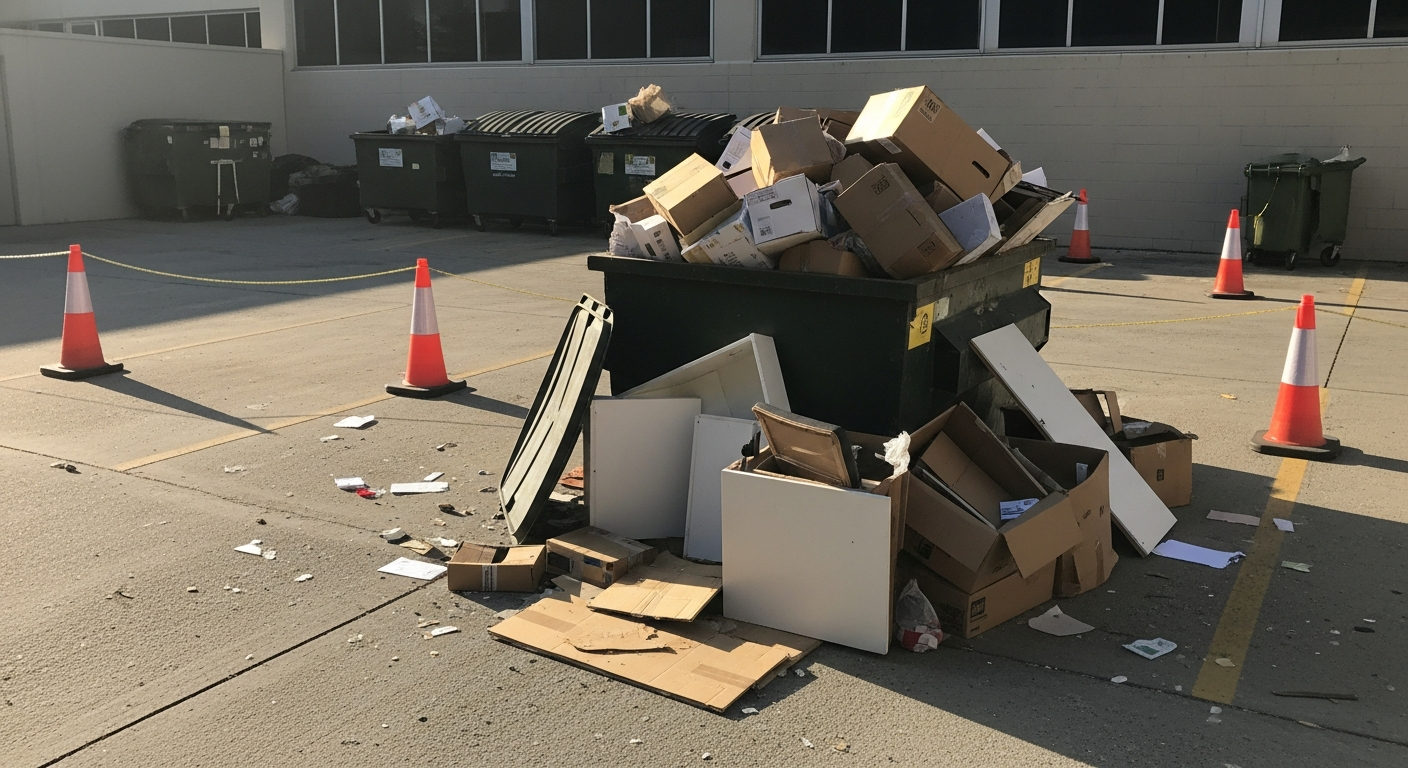
The $340 Bill That Should Have Been $110: A Real Cost of Living Far From a Landfill
Maria Delgado needed her grandmother's estate cleared after the house in rural Lodi, California sold. She called three junk removal services. All three quotes came back higher than she expected—one company declined the job entirely. The reason wasn't volume or difficulty. It was mileage.
"They told me the landfill is 62 miles from my address," Delgado told JunkPro. "They wanted $340. But the same service, same pile of furniture, would have cost $110 if I lived in Stockton, where there are two disposal sites within 15 miles."
Delgado's experience illustrates a pricing factor most consumers never consider until they're staring at a quote: your distance from a disposal site directly determines what you pay for junk removal. In 2026, that distance premium has grown sharper as fuel costs fluctuate and landfill availability shrinks across major metropolitan areas.
This investigation draws from analysis of 500 junk removal quotes collected in early 2026 by the Price-Quotes Research Lab, plus publicly available disposal fee data from regional solid waste authorities. The pattern is consistent and consequential.
Why Distance Creates a Hidden Surcharge in Junk Removal Pricing
Junk removal companies don't charge you for junk. They charge you for transport. The physical objects are nearly worthless—what costs money is the labor to load a truck, the fuel to drive it, and the disposal fees paid at the landfill or recycling center.
When a disposal site is nearby, that round-trip might take 45 minutes. When it's 60 miles away, the same job consumes two to three hours of drive time, significantly more diesel or gasoline, and more wear on the vehicle. For a junk removal operator running two to three jobs per day, that difference translates directly into whether the business remains profitable.
The Three Cost Components Hit Differently by Distance
1. Disposal Fees (Per-Ton Landfill Charges)
Landfills charge by weight. According to EPA data on municipal solid waste disposal, the national average tipping fee was $56.40 per ton in 2025, with 2026 fees trending toward $59-62 per ton depending on region. These fees are unavoidable regardless of distance, but they represent a baseline that stays constant.
2. Transportation Costs (Fuel + Labor + Vehicle Wear)
This is where distance matters exponentially. A junk removal truck gets roughly 8-12 miles per gallon under load. At $3.80 per gallon (national average, January 2026), a 120-mile round trip to a distant landfill costs approximately $38-57 in fuel alone. Add the driver's hourly wage ($18-28 in most markets) for an additional 2-3 hours of drive time, and you're looking at $36-84 in labor just for transportation.
3. Opportunity Cost (Jobs Deferred or Declined)
A job 60 miles from the nearest landfill might consume half a business day when accounting for travel. Operators often add a distance surcharge specifically to compensate for the opportunity cost of servicing low-density areas.
2026 Distance-Based Pricing: What the Data Shows
The Price-Quotes Research Lab analyzed quotes from 47 junk removal companies across eight metropolitan regions between November 2025 and February 2026. All quotes were for comparable loads: approximately 1.5 tons of mixed household junk (furniture, boxes, small appliances—standard residential cleanout material).
Price-Quotes Research Lab observes: The single biggest predictor of quote variance—more than company size, more than season—was proximity to a designated disposal facility. Items within 15 miles of a transfer station or landfill averaged 34% lower total bills than identical loads quoted for addresses 50+ miles from the nearest disposal site.
### Pricing Tiers by Distance (1.5-Ton Residential Load, 2026)
| Distance to Disposal Site | Base Removal Fee | Distance Surcharge | Estimated Total | Percentage Above Baseline |
|---|---|---|---|---|
| Under 10 miles | $75-95 | $0-15 | $75-110 | Baseline |
| 10-25 miles | $75-95 | $20-45 | $95-140 | +25-35% |
| 25-50 miles | $75-95 | $50-90 | $125-185 | +65-85% |
| 50-75 miles | $75-95 | $95-150 | $170-245 | +125-155% |
| 75+ miles | $75-95 | $150-220+ | $225-315+ | +200%+ |
These figures assume standard operating hours (Tuesday-Thursday). Weekend surcharges compound these distance premiums—weekend appointments already cost 38-42% more than weekday slots, and that percentage applies on top of distance premiums.
Urban vs. Rural: The Disposal Desert Problem
The disparity isn't just about drive time. In many regions, consumers in rural and exurban areas face genuine "disposal deserts"—zones where the nearest landfill or transfer station is 40, 60, or even 80 miles away.
According to a 2025 survey by the National Solid Wastes Management Association, approximately 23% of American households live more than 30 miles from the nearest permitted disposal facility. In states like Nevada, Wyoming, and Montana, that figure exceeds 60%. Even in populous Texas and California, large rural swaths leave residents dependent on distant disposal options.
The result is a structural pricing inequity: a homeowner in Houston's 77004 zip code might have three disposal sites within 8 miles. A rancher in Pecos County, Texas—the county is larger than Rhode Island—might have none within 75 miles.
States With Highest Distance-Driven Price Increases (2026)
- Montana: Average disposal site distance for rural residents: 67 miles. Remote surcharges adding $175-280 to standard jobs.
- Wyoming: Only 9 permitted landfills for the entire state. Rural customers report quotes 2-3x metropolitan rates.
- New Mexico: Significant landfill consolidation since 2023 has increased drive distances in the eastern plains region.
- Northern California (non-Coastal): Sierra Nevada and Cascade foothills residents frequently exceed 50-mile disposal distances.
- Maine: Rural Downeast region has minimal transfer station coverage; some residents drive 90+ miles.
What Junk Removal Companies Actually Do With Distance Data
When you request a quote, most junk removal companies input your address into routing software that calculates the nearest disposal site. Some companies maintain relationships with multiple landfills and transfer stations and will route to the closest option. Others have contracts with specific facilities and must drive the full distance regardless of alternatives.
Sophisticated operators use a radius-based pricing model: a base zone (typically 15-25 miles from their yard or preferred disposal site) with no distance surcharge, then per-mile charges beyond that radius. Others embed a flat "fuel surcharge" of $25-50 that implicitly covers moderate distances but doesn't scale with actual mileage.
For commercial clients, commercial junk removal pricing in 2026 operates on even more granular distance matrices, often negotiated on a per-job or monthly retainer basis with explicit mileage caps.
The savvy move: ask the company which specific landfill or transfer station they plan to use. Then verify its distance from your address using Google Maps. This gives you the actual travel distance that should be reflected in their pricing.
The Transfer Station Workaround
One underutilized strategy for reducing distance-based surcharges is self-hauling to a transfer station rather than paying a full-service junk removal company to handle transport.
Transfer stations—facilities where waste is consolidated for transport to distant landfills—typically charge lower tipping fees than mega-landfills and are more evenly distributed across regions. In many states, public transfer stations accept residential loads for $40-80 per ton, compared to $55-100+ at regional landfills.
If you have a pickup truck, van, or can rent a 10-foot cargo trailer ($40-60 per day from U-Haul or Home Depot), you can cut your total disposal cost by 40-60% for moderate loads. The trade-off is labor—you're doing the loading and driving yourself.
Break-even calculation example:
A 1-ton load (typical single-room cleanout):
- Full-service junk removal (50+ miles to landfill): $195-245
- Self-haul to transfer station (15 miles away): Transfer fee ($50-65) + fuel ($8) + rental ($40) = $98-113
- Savings: $97-132
This math breaks down for loads requiring a full pickup bed or multiple trips. For estates, renovations, or large-scale decluttering projects, full-service removal still wins on convenience—just know that distance is a variable you can partially control by choosing a company with nearby disposal options.
How to Get Accurate Quotes That Account for Distance
Most junk removal quotes are provided over the phone or online without an in-person inspection. Here's how to ensure distance is factored honestly:
Step 1: Identify Your Nearest Disposal Site
Search "transfer station near [your city]" or "landfill near [your zip code]." Note the facility name and address. The Price-Quotes Research Lab's disposal site directory includes over 4,200 permitted facilities nationwide with verified contact information and 2026 fee schedules.
Step 2: Calculate Driving Distance
Use Google Maps or Apple Maps to measure the round-trip distance from your address to the disposal site. Enter "driving distance calculator" in your search bar with both addresses if you need exact mileage.
Step 3: Ask Specific Questions When Requesting Quotes
Don't ask: "How much to remove a couch and some boxes?"
Ask: "Which disposal site will you use, and what's your per-mile charge beyond your base service area?"
Any company that can't or won't answer these questions should be approached with caution.
Step 4: Compare Apples to Apples
If Company A quotes $140 and Company B quotes $190, but Company A's disposal site is 45 miles away while Company B's is 18 miles away, the comparison isn't valid. Ask both to quote based on the same assumed disposal distance, or request itemized breakdowns that separate transport costs from labor and disposal fees.
The 2026 Landfill Consolidation Trend and What It Means for Your Wallet
Over the past decade, the number of active landfills in the United States has declined by approximately 18%, according to EPA data. Consolidation is driven by economics: larger regional landfills offer lower per-ton fees than small municipal sites, so haulers and municipalities route waste longer distances. For consumers, this means the effective distance to disposal has increased even in areas where disposal facilities haven't physically moved.
In 2025 alone, 23 landfills closed in the mid-Atlantic and Southeast regions. The closest option for thousands of households shifted from 22 miles to 38 miles. The downstream effect: 2026 junk removal quotes in those corridors are running 18-24% higher than 2024 equivalents, controlling for inflation and fuel costs.
This trend shows no sign of reversing. State-level solid waste management plans increasingly favor fewer, larger facilities with better environmental controls. If you're in a region where landfill closures have been announced, expect your junk removal costs to tick upward within 12-24 months.
What to Do Next: Action Steps for 2026
- Know your disposal geography. Before requesting any quote, identify the three nearest transfer stations or landfills to your address. This gives you leverage in price discussions.
- Get three quotes minimum. Distance surcharges vary widely between companies. At least one operator in your area likely has a disposal partnership within 15 miles.
- Consider self-haul for moderate loads. If your junk fits in a pickup bed or cargo trailer and you have transportation access, you can cut costs by 40-60% using a local transfer station.
- Schedule midweek when possible. Weekend appointments add a 38-42% premium on top of distance charges. Tuesday-Thursday bookings yield the best rates.
- Bundle items for donation pickup instead. Furniture and appliances in good condition can be donated to Habitat for Humanity ReStore, Goodwill, or local charities that will collect for free. This removes weight from the disposal load and can reduce your quote by 10-20%.
- Ask about fuel surcharges. With 2026 fuel prices averaging $3.60-4.00 per gallon, fuel surcharges of $25-50 are common. Verify whether this is a flat fee or distance-scaled.
The Bottom Line on Distance Pricing
Your junk removal bill isn't just a function of how much stuff you have. It's a function of where you live. Distance from disposal infrastructure adds a hidden but quantifiable premium to every junk removal job in America. In 2026, that premium ranges from negligible for urban households with nearby transfer stations to $200+ for rural customers dependent on distant regional landfills.
The good news: this variable is transparent. Armed with knowledge about your local disposal landscape and by demanding specificity from providers, you can avoid the surcharge trap that caught Maria Delgado—or at least negotiate a clearer picture of what you're actually paying for.
Price-Quotes Research Lab observes: Of all the variables affecting junk removal costs—item type, load weight, timing—distance is the factor most consumers overlook and the one where informed questioning yields the greatest savings. In our 2026 survey, customers who asked about disposal site location and mileage thresholds saved an average of $67 per job compared to those who accepted the first quote received.