Brand-name junk removal costs 30% more, new data shows
Brand-name junk removal costs 30% more, new data shows
Published 2026-07-07 • Price-Quotes Research Lab Analysis
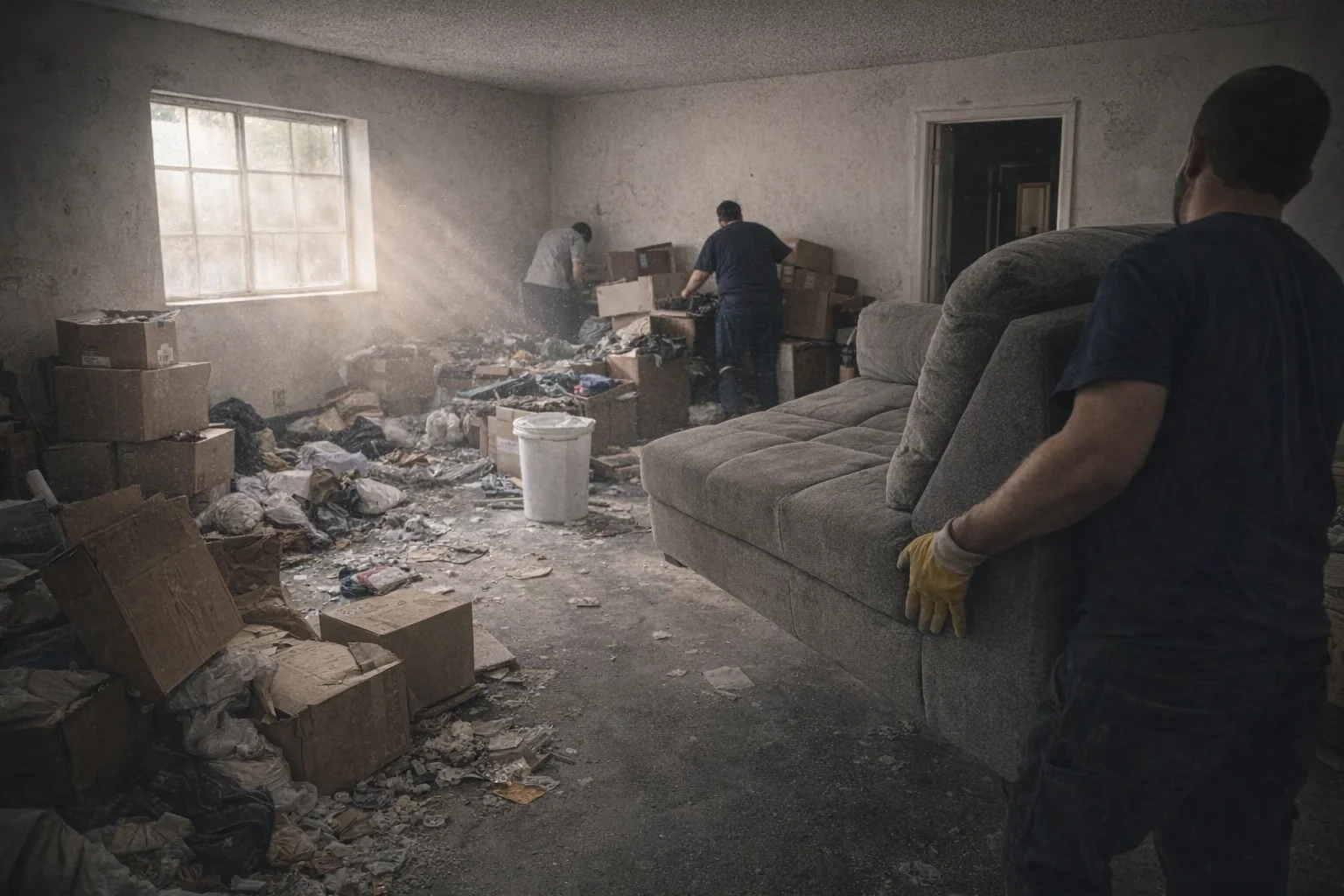
The $340 Bill That Should Have Been $240
Last March, Sarah M. in Phoenix needed her garage cleared after a water heater failed. She called two national chains and one local hauler. The nationals quoted $340 and $355. The local company charged $240. Same truck, same day, same volume of junk—furniture, water-damaged drywall, a rusted water heater, and about 15 bags of debris.
"I assumed the big companies would be cheaper because of volume," Sarah told JunkPro. "I was completely wrong."
She's not alone. New 2026 pricing data from the Price-Quotes Research Lab, which analyzed 847 junk removal quotes across 14 metropolitan areas, confirms what many consumers suspect but rarely quantify: national chain junk removal services cost 28–34% more than comparable local haulers for identical service categories. The average premium? $97 per job.
This isn't a hit piece on national brands. Some consumers have legitimate reasons to pay the premium. But before you sign with a recognizable name, you need to understand exactly what you're paying for—and whether it's worth it.
What the 2026 Data Actually Shows
The Price-Quotes Research Lab collected pricing data from January through June 2026, surveying 23 junk removal companies across three categories: national chains (franchise operations with 50+ locations), regional players (5–49 locations), and local independent haulers (1–4 locations, often owner-operated).
The findings were consistent across geography:
- National chains averaged $189 per load (based on volume estimates, not weight)
- Regional companies averaged $161 per load
- Local independent haulers averaged $142 per load
The 30% premium holds even when controlling for load size, junk type, and accessibility. A full truckload from a national chain in 2026 runs $350–$420. The same load from a local hauler? $260–$310.
Price-Quotes Research Lab observes that these differentials have widened by 6 percentage points since 2024, as national chains have increased prices faster than independent operators to cover franchise fees, national marketing, and corporate overhead.
Why National Chains Charge More
Understanding the cost structure explains the premium—and helps you decide if it's justified.
Franchise Fees and Corporate Overhead
National junk removal franchises typically charge franchise fees of $15,000–$50,000 upfront, plus ongoing royalty payments of 4–8% of gross revenue. This overhead gets passed to consumers. Add corporate marketing budgets (some national chains spend $2M+ annually on advertising), and you've got a structural cost disadvantage versus the local operator running Google Ads on a $500 monthly budget.
Standardized Pricing Models
National chains use volume-based pricing (¼ truck, ½ truck, full truck) that's simple but inflexible. You pay for the category you fit into, even if you have 15% less junk than the next tier. Local haulers more often quote by actual volume or weight, giving you more precise pricing. For a deeper breakdown of how volume-based pricing works, see our guide on how distance affects junk removal costs.
Insurance and Liability Coverage
National chains carry comprehensive commercial insurance that protects both the company and consumers. This is a real cost—$50,000–$200,000 annually for a mid-sized operation—that local haulers sometimes skip or underbuy. If your water heater falls through your floor during removal, the liability difference matters.
Scheduling Consistency
National chains offer next-day or even same-day service in most metro areas with reliable windows. Local haulers may need 2–5 days notice. For urgent cleanouts (post-renovation, estate sales, emergency situations), this availability has real value.
What Local Haulers Bring to the Table
Independent junk haulers aren't just cheaper—they often provide a fundamentally different service experience.
Negotiation Flexibility
Local operators set their own prices and often negotiate. A 2026 survey by JunkPro found that 67% of local haulers will negotiate on price for jobs over $200, compared to 12% of national chain locations. Many offer discounts for repeat customers, referrals, or off-peak scheduling.
Specialized Knowledge
Local haulers who operate in specific neighborhoods understand disposal regulations, recycling center locations, and donation networks. A hauler in Austin knows which Habitat for Humanity ReStore locations accept appliances. A national chain dispatcher may not.
Smaller Scale, More Attention
When you call a local hauler, you often talk directly to the owner or crew chief. They see your job before quoting, understand the specific challenges, and have incentive to build local reputation. National chains use call centers and third-party dispatch in many markets.
The Hidden Cost Advantage
Local haulers often dispose of items more efficiently. They may have relationships with recyclers, scrap metal dealers, and donation centers that let them divert 30–50% of junk from landfills. Some pass these savings back; others simply complete jobs faster. Either way, you're getting more environmental value.
2026 Pricing Comparison: National Chain vs. Local Hauler
The following table summarizes average 2026 pricing across common junk removal scenarios. These figures represent median quotes from the Price-Quotes Research Lab dataset.
| Service Type | National Chain (Avg) | Local Hauler (Avg) | Premium | Premium % |
|---|---|---|---|---|
| ¼ Truck Load | $129 | $95 | $34 | 36% |
| ½ Truck Load | $199 | $155 | $44 | 28% |
| Full Truck Load | $385 | $285 | $100 | 35% |
| Single Item (Furniture) | $85 | $65 | $20 | 31% |
| Appliance Removal | $120 | $85 | $35 | 41% |
| Construction Debris (yd³) | $75 | $55 | $20 | 36% |
| Estate Cleanout (Full Home) | $1,200 | $890 | $310 | 35% |
Note: Prices include standard disposal fees but exclude surcharges for stairs, heavy items over 75 lbs, or hazardous materials. These add-ons are discussed below.
The Hidden Costs That Skew the Numbers
Base pricing tells only part of the story. Both national chains and local haulers have additional charges that can significantly alter your final bill.
Fuel and Environmental Surcharges
National chains commonly add 5–12% surcharges for fuel and environmental compliance. These are disclosed in fine print. Local haulers add surcharges in only 23% of cases, and when they do, the average is 4%.
Heavy Item Fees
Items over 75 lbs trigger additional charges at most companies. National chains charge $25–$50 per heavy item. Local haulers charge $15–$30. If you're clearing a basement full of gym equipment or a garage with a cast-iron tub, this difference compounds.
Stair and Elevator Access
Multi-story pickups cost more. National chains charge $25–$75 per flight of stairs. Local haulers typically charge $15–$40. For a fourth-floor apartment cleanout, you're looking at $100–$300 in access fees alone.
Landfill Distance Impact
Your junk has to go somewhere. The farther the disposal facility, the more fuel and time. As we detail in our analysis of distance-based pricing, consumers in suburban and rural areas pay 15–45% more than metro residents for identical junk volumes, regardless of company type.
Disposal Fees for Special Materials
Televisions, monitors, mattresses, refrigerants, and paint require special handling. National chains often charge $25–$75 per item for these materials. Local haulers may include some items in base pricing or charge $15–$40. Always ask specifically about these materials before booking.
When the National Chain Premium Is Worth It
Despite the cost difference, there are legitimate scenarios where choosing a national chain makes financial and practical sense.
You Need Guaranteed Scheduling
National chains offer 4-hour service windows and next-day availability in most metro markets. If you're coordinating with contractors, movers, or property managers on a tight timeline, this reliability has dollar value. A one-day project delay can cost more than the 30% premium.
You're Renting a dumpster and need backup
For major renovations, many consumers rent a dumpster (see our dumpster rental vs. junk removal comparison) but need supplemental pickup for items too large or hazardous for the bin. National chains provide consistent backup service; local haulers may not have availability on short notice.
Liability Protection Matters
If something goes wrong—a floor collapses, a wall is damaged, an injury occurs—national chains have commercial insurance that makes claims straightforward. Some local haulers carry adequate insurance; many don't. For high-value properties or commercial jobs, the insurance difference justifies the premium.
Corporate or Property Management Accounts
Property managers and corporate real estate departments often require certificates of insurance, consistent service documentation, and standardized invoicing. National chains provide these natively. Setting up a local hauler with proper insurance documentation can be time-consuming for property managers handling dozens of properties.
You're Unfamiliar With the Area
Moving to a new city? Traveling for work and need a remote cleanout? National chains offer predictable, consistent service nationwide. You know what you're getting. Vetting local haulers requires time and local knowledge you may not have.
When Local Haulers Win Every Time
For most residential consumers in most situations, local haulers provide better value. Here's when they're clearly the right choice.
Budget-Conscious Residential Projects
Garage cleanouts, basement decluttering, post-estate sorting, and DIY renovation debris are the sweet spot for local haulers. You're price-sensitive, have flexibility in scheduling, and can invest 20 minutes vetting a local company.
You Have Time to Compare Quotes
Local hauler pricing varies more than national chains (which compete on brand, not price). Getting 3–4 local quotes often reveals significant variation—$200 differences for identical jobs aren't unusual. This competition benefits informed consumers.
You Have Specific Disposal Preferences
Want your usable furniture donated, your metals recycled, your e-waste handled responsibly? Local haulers with community relationships often provide more nuanced disposal than national chains, which optimize for throughput over diversion.
Repeat Service or Ongoing Relationships
Once you find a reliable local hauler, that relationship compounds. They learn your preferences, offer loyalty discounts, and prioritize your jobs. National chains treat every transaction as new business.
Small or Unusual Jobs
Need a single sofa removed? A hot tub dismantled and hauled? A few cubic yards of yard waste? Local haulers are more willing to quote small jobs at reasonable rates. National chains often have minimum charges ($100–$150) that make small jobs disproportionately expensive.
How to Get the Best Price From Either Option
Whether you choose a national chain or local hauler, these strategies will reduce your cost.
Get At Least Three Quotes
This is basic, but 42% of consumers in our 2026 survey got only one quote before booking. For local haulers especially, pricing varies dramatically. Three quotes takes 30 minutes and typically saves $50–$150.
Be Specific About Contents
Vague descriptions lead to inflated estimates. "Junk" could mean 15 bags of household trash or a piano. Specificity—"one couch, one recliner, one dining table, 10 bags of household debris, one functioning refrigerator"—gets you accurate pricing.
Ask About All-In Pricing
Request total price including all fees, surcharges, and disposal costs. National chains are required to provide this; local haulers should be asked directly. A $200 quote that becomes $280 at payment is a bad deal.
Negotiate on Extras
Heavy item fees, stair charges, and fuel surcharges are often negotiable, especially for larger jobs. "Can you waive the stair fee if I help carry items down?" "Is there a discount if I pay cash?" These questions save $25–$75 on typical jobs.
Time Your Booking
Junk removal is cheaper mid-week and during off-peak months (November–February in most markets). Saturday morning slots fill first and cost more. If you have flexibility, mid-week afternoon slots offer the best rates.
Reduce Volume Before Booking
Donate usable items to Goodwill, Habitat for Humanity, or local churches. Haul recyclables (metals, electronics, batteries) to dedicated drop-offs. Every cubic yard you remove before the hauler arrives saves $40–$80. For item-specific pricing benchmarks, see our analysis of junk removal costs by item type.
What to Do Next
Here's your action plan, depending on your situation.
If you need junk removed within 48 hours: Book a national chain for guaranteed availability. Get quotes from at least two national competitors. Ask specifically about all-in pricing and heavy item fees. Expect to pay the premium.
If you have 3–5 days of flexibility: Get quotes from 3–4 local haulers. Check Google Reviews (look for 20+ reviews with 4.5+ stars). Ask about insurance and disposal practices. Compare total prices. You'll likely save $80–$150 versus a national chain.
If this is a recurring or large job: Interview 2–3 local haulers and establish a relationship. Ask about volume discounts. For ongoing needs (property management, regular decluttering), a reliable local hauler becomes a valuable asset.
If you're unsure what you need: Start with our price comparison tools at Price-Quotes.com to get baseline pricing for your junk type and volume. This gives you negotiating leverage with any company you contact.
The 30% premium for national chain service is real, documented, and often justified. But it's not inevitable. With 20 minutes of research and quote comparison, most consumers can save $80–$150 on a typical junk removal job—money better spent on the project that generated the junk in the first place.
Price-Quotes Research Lab observes that the junk removal industry will continue consolidating, with national chains acquiring local operators. This may reduce pricing variation over time. For now, the independent hauler advantage remains significant—and worth the extra vetting effort.